


Published
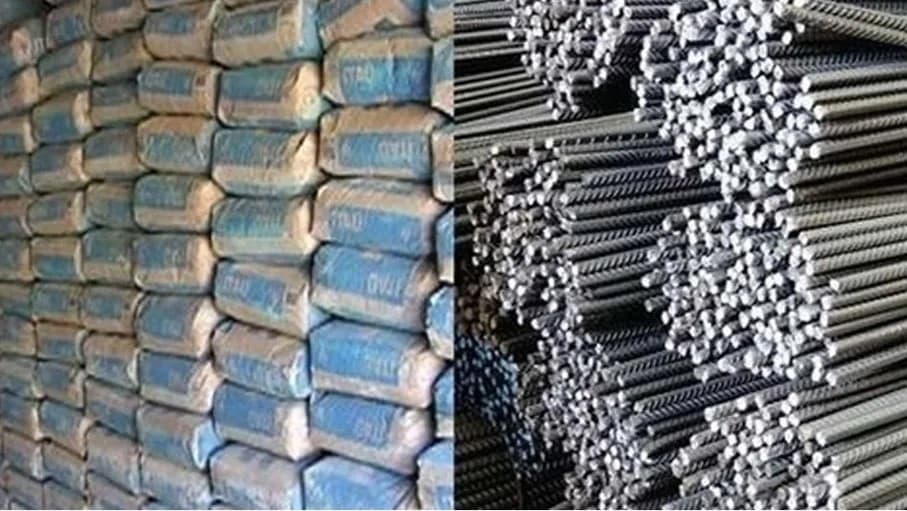
The rise in the number of building permits and licensed residential floor area in the first half of this year has opened a window for improved demand for cement and reinforcing steel, but experts and investors stress that talk of a real and sustained recovery in both sectors still depends on these permits moving from the planning stage to execution, alongside faster progress on government and infrastructure projects.
According to a report issued by the Department of Statistics, the number of building permits issued in the Kingdom in the first half of 2026 reached about 12,070, compared with 11,700 in the same period last year, an increase of 3.2%.
Total licensed floor area also rose by 2% to about 4.87 million square metres, compared with 4.77 million square metres in the first half of last year.
Notable was the growth in residential floor area, which rose by 10% from about 3.66 million square metres to nearly 4.03 million square metres, an indicator of improved expected activity in the housing market, although this does not necessarily mean the increase has fully translated into actual demand for building materials.
Residential floor area accounted for about 82.6% of total licensed floor area in the first half of the year, against 17.4% for non-residential purposes, underlining the importance of housing activity in setting the direction of demand for core building materials, chief among them cement and reinforcing steel.
However, the permit figures should be read with some caution, as new buildings and extensions made up about 57.5% of total licensed floor area, while existing buildings whose status was regularised and which were granted permits accounted for 42.5%.
Majed Ghosheh, Chairman of the Board of the Jordanian Housing Developers Association, said that "there is no standard time frame between the issuance of a building permit and the actual start of construction", explaining that the period varies depending on the availability of financing, the size of the project, and the completion of regulatory procedures and requirements.
Ghosheh added that a permit "is a leading indicator of expected construction activity, not an indicator of building material consumption at the moment it is issued", noting that actual demand for steel and cement begins with excavation, foundations and structural works.
He stressed that a 3.2% rise in the number of permits or a 2% rise in licensed floor area does not necessarily mean consumption of the two materials rises by the same rates, noting that the more accurate indicator is the area of new projects actually entering execution, along with the pace of government tenders and infrastructure projects.
Cement Sales Jump, Reaching 1.6 Million Tonnes in Six Months
In the cement market, actual demand indicators appear to have been more positive in the first half of the year. Amer Al-Khatib, President of the Jordan Cement Producers Association, said the effect of higher building permits on cement demand does not appear immediately, as it is tied to when projects start, a stage that usually takes between six months and a year from the date the permit is issued.
Al-Khatib said cement sector sales grew clearly in the first half of this year, reaching about 1.6 million tonnes, compared with 1.2 million tonnes in the same period of 2025, an increase of about 33.3%.
He added that daily deliveries ranged between 10,000 and 12,000 tonnes, expressing optimism that demand will continue to grow in the coming period amid lower cement prices.
These figures point to a tangible improvement in cement sales in the first six months of the year, while the increase in residential permits could give the market an additional boost in the second half, provided licensed projects move into actual execution.
The cement equation therefore appears to depend not only on the volume of new permits but on how quickly they turn into excavation and construction work, the stage at which real and intensive demand for cement begins.
Steel Faces a Different Test, and Imports Alone Do Not Reveal Consumption
As for the reinforcing steel market, the available data do not include a single aggregate figure for local reinforcing steel sales in the first half of the year.
Data from the Jordan Shipping Association showed that steel imports through the Port of Aqaba fell by 13.1% compared with the same period last year, but imports alone do not represent local consumption or sales, given local production and stocks held by factories and traders.
Assessing the direction of steel demand therefore requires looking at a broader set of indicators, including actual construction activity, the volume of new projects and the stock available in the market, as well as local production and imports.
While residential floor area grew notably, floor area licensed for non-residential purposes fell by 24%, from about 1.11 million square metres to 846,000 square metres.
Ghosheh believes this decline may limit future demand linked to commercial and office projects if it carries through to execution, but noted that the existing stock of vacant offices and commercial space may reflect a degree of sufficiency in some uses.
This matters particularly given the nature of non-residential projects, as commercial and industrial projects, warehouses and large facilities can consume more steel and cement than small residential projects.
For his part, economist Mohammad Thiab said that a rise in the number of permits alone is not enough to indicate a recovery in construction or real estate investment, stressing the need to link this increase to the floor area on which work has actually begun, the type and geographical distribution of permits, and the number of units actually sold.
He explained that government tenders and road and infrastructure projects help offset weakness in some private sector indicators, but are not enough on their own to bring about a sustained recovery, especially if projects face delays in financing or execution.
This reading shows that the building materials sector does not move in isolation from the real estate and construction cycle, but is affected by successive stages, starting with licensing, then financing, then the start of works, through to sale and handover. The longer the time between these stages, the weaker the effect of higher permits on actual demand.
For his part, housing investor Eng. Nasrallah Rafiq Nasrallah said that issuing a permit does not mean construction starts immediately, noting that some housing investors may postpone starting work for six to eight months depending on liquidity and sales, while for individual building projects the period may extend to a year or more. The construction industries sector is a key pillar of the economy: according to a 2025 report by the Jordan Chamber of Industry, it contributes about 2.2% of GDP, with a production capacity exceeding JOD 1.7 billion a year.
The sector comprises about 2,203 establishments employing nearly 15,000 workers, while local production covers about 82% of the Kingdom's consumption of the sector's products, led by cement, steel and their products.
The first-half figures give positive signals, particularly with licensed residential floor area growing by 10% and cement sales rising by about 33.3%, but sustaining these trends and turning them into a broader recovery requires more than just a rise in the number of permits.
The decisive indicator in the coming period will be the number of projects that actually move from paper to work sites and how quickly excavation, foundation and structural works begin, along with the market's ability to absorb new housing units, the availability of financing, improved apartment sales, and faster execution of government and infrastructure projects.