

Published
Akhbar Al Balad -
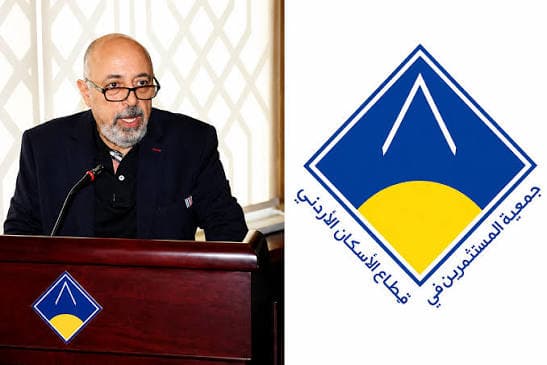
Chairman of the Board of the Jordanian Housing Developers Association (JHDA), Majed Ghosheh, affirmed that the real estate indicators issued by the Department of Lands and Survey for June 2026 reflect the start of a gradual recovery in the Jordanian real estate market, after months in which market activity was affected by economic conditions and regional tensions. He noted that the marked rise in trading volume, revenues and the number of sales confirms the sector's ability to regain momentum whenever a supportive legislative and investment environment is in place.
He explained that the rise in real estate trading volume in June to around JOD 584 million, up 7% on the same period of 2025 and 23% on the previous month, together with a 12% increase in property sales compared with the same month of 2025 and 13% compared with the previous month, as well as strong 39% growth in real estate revenues, are positive indicators confirming the return of demand to the market, particularly with the start of the summer season and the return of Jordanians working abroad, in addition to improved investor confidence in the Jordanian real estate market.
He added that the indicators must be read as a whole, as the first half of the year still shows a 3% drop in trading volume and an 8% decline in the number of properties sold compared with the same period last year. This reflects the continued impact of high financing and construction costs, the wait-and-see mood that accompanied the debate on several real estate laws, and regional conditions that led some investors to postpone purchase and investment decisions.
He pointed out that housing and real estate investment companies purchased 4,633 properties since the beginning of the year, a clear sign of local investors' confidence in the resilience of the Jordanian market and its future prospects, stressing that the sector has strong fundamentals that qualify it to achieve higher growth rates once the required reforms are completed.
He noted that the striking 145% rise in the estimated value of property transactions by non-Jordanians in June, and the 27% increase in the number of their transactions, confirm Jordan's continued appeal as a safe destination for real estate investment, given its political, security and legislative stability compared with many countries in the region. This calls for building on these indicators through more attractive policies to draw Arab and foreign investment.
He stressed that the next phase requires completing the legislative reform of the real estate sector, foremost by expediting the approval of regulatory legislation that enhances market efficiency, and by working towards an integrated legislative framework to regulate the real estate sector as one of the largest economic sectors and among the most influential in investment and employment, helping to unify regulatory references and strengthen investor confidence.
He emphasized the importance of reviewing the fees and costs associated with real estate development, expanding the incentives granted to local and non-Jordanian investors, and encouraging housing projects targeting the middle class and young people, so as to balance stimulating investment with meeting housing needs and to strengthen the sector's contribution to the goals of the Economic Modernization Vision.
Majed Ghosheh concluded by affirming that the positive indicators recorded in June represent a real opportunity for a stronger take-off in the second half of the year, expressing confidence that continued government reforms, a stronger partnership with the private sector and the preservation of the stability Jordan enjoys will help restore momentum to the real estate market, increase its ability to attract investment and achieve sustainable growth that serves the national economy.